Create Your Own Ad: A Complete Guide for 2026
· 10 min read

Creating effective advertising has become more accessible than ever, yet the proliferation of platforms and formats means success requires more than just good instincts. Whether you're a solo creator, a growing brand, or an app marketer managing multiple campaigns, knowing how to create your own ad from concept to launch gives you control over your message, budget, and results. The fundamental principles remain consistent: understand your audience, craft compelling creative, and test relentlessly. But the tools and tactics have evolved dramatically, particularly with the rise of automation and AI-powered creative assistance that can help you scale production without sacrificing quality.
Understanding the Strategic Foundation
Before you create your own ad, you need a clear strategic framework. Every successful advertisement begins with three core questions: Who is the target audience? What action do you want them to take? And what message will drive that action?
Audience definition goes beyond demographics. You need to understand psychographics, behavioral patterns, and the specific pain points your product or service addresses. A fitness app targeting busy professionals requires different messaging than one aimed at dedicated athletes, even if both groups fall into the same age range.
Defining Your Campaign Objective
Campaign objectives determine every downstream decision, from creative format to placement strategy. Consider these primary objective categories:
- Awareness: Introducing your brand or product to new audiences
- Consideration: Driving engagement, app installs, or lead generation
- Conversion: Generating sales, sign-ups, or specific actions
- Retention: Re-engaging existing customers or users
Each objective requires different creative approaches and success metrics. Awareness campaigns benefit from broad reach and memorable branding, while conversion campaigns demand clear calls-to-action and urgency-driven messaging. HubSpot's comprehensive guide provides platform-agnostic frameworks for aligning creative with objectives.

Crafting Compelling Creative Assets
The creative component is where most advertisers either succeed spectacularly or fail quietly. When you create your own ad, the visual and verbal elements must work together seamlessly to capture attention and communicate value within seconds.
Visual Design Principles
Strong ad creative follows tested design principles regardless of platform. Contrast draws the eye, making your primary message stand out against busy social feeds. Hierarchy guides attention, ensuring viewers process information in the intended order. Consistency builds recognition, especially when running multiple ads across campaigns.
| Design Element | Best Practice | Common Mistake |
|---|---|---|
| Color palette | Use 2-3 brand colors with high contrast | Overwhelming rainbow effects |
| Typography | Maximum 2 fonts, clear hierarchy | Multiple competing typefaces |
| White space | 30-40% of canvas for breathing room | Cramming every pixel with content |
| Focal point | One clear primary element | Multiple competing focal points |
Consider how static images, carousel ads, and video formats serve different purposes. Static images excel at simple, bold messages. Carousels enable storytelling across multiple frames or showcasing product variety. Video captures attention and can demonstrate complex concepts, though production costs run higher.
Writing Copy That Converts
Ad copy must accomplish several tasks simultaneously: grab attention, communicate value, address objections, and drive action. The most effective approach depends on your audience's awareness level.
For cold audiences unfamiliar with your brand, lead with the problem or desire. "Struggling to keep up with social content demands?" immediately resonates with overwhelmed marketers. Then introduce your solution as the logical answer.
For warm audiences who know your category, differentiation matters most. What makes your solution unique? Why choose you over competitors? Specificity builds credibility: "Generate 30 days of social content in 2 hours" beats generic "save time" claims.
The Think with Google creative best-practices guide offers format-specific recommendations for Search, Display, and Video ads backed by extensive testing data.
Choosing and Optimizing for Platforms
Different platforms demand different creative approaches when you create your own ad. What performs well on Instagram may fall flat on LinkedIn, and TikTok creative requires entirely different thinking than Facebook.
Platform-Specific Creative Requirements
Understanding technical specifications prevents quality loss and rejected ads. Beyond dimensions and file sizes, each platform has unique creative cultures and user expectations.
Instagram and Facebook favor thumb-stopping visuals with minimal text overlay. The algorithm penalizes ads with excessive text in images. Vertical (4:5 or 9:16) formats claim more screen real estate in feeds and Stories. Authenticity performs better than polished, studio-shot creative, especially for younger demographics.
LinkedIn responds to professional imagery and value-driven messaging. B2B audiences skip flashy tactics in favor of clear ROI demonstrations. Thought leadership angles, industry insights, and professional development themes outperform hard sales pitches.
TikTok and YouTube Shorts require native-feeling content. Ads that look like ads get skipped immediately. Successful creative mimics organic content patterns: user-generated aesthetics, trending audio, and authentic presenter energy. Production quality matters less than authenticity and entertainment value.
Testing Creative Variables
Systematic testing separates mediocre performance from breakthrough results. When you create your own ad campaigns, build testing into your workflow from day one.
- Isolate single variables to understand what drives performance changes
- Run tests with sufficient sample size before declaring winners (minimum 1,000 impressions per variant)
- Test big swings first like entirely different concepts, then optimize details
- Document learnings to build institutional knowledge across campaigns
- Retest winning combinations as audience fatigue sets in after 2-3 weeks
The Advertising Research Foundation provides methodologies for creative testing and attention measurement that help advertisers understand not just what performs, but why.
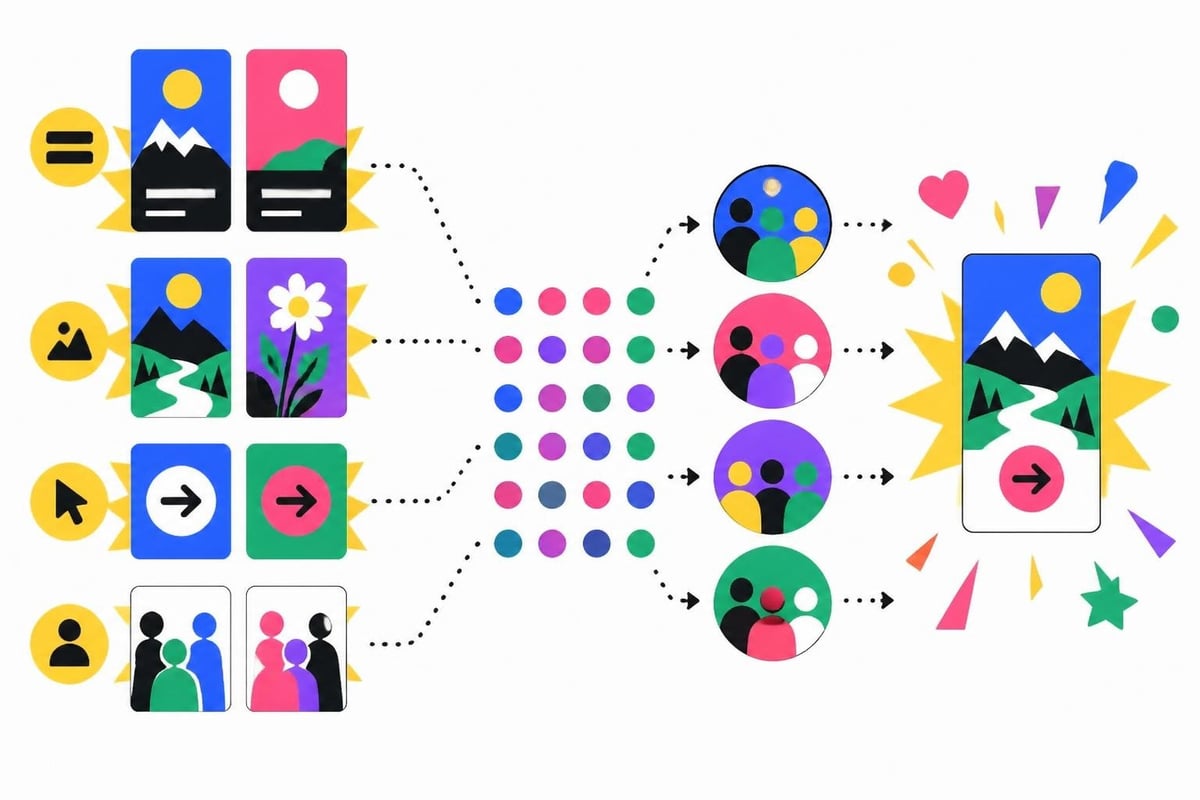
Scaling Production Without Sacrificing Quality
The most significant challenge marketers face isn't creating one great ad. It's producing dozens or hundreds of high-performing ads to feed algorithm-driven platforms that demand constant fresh creative. Manual production doesn't scale, yet fully automated approaches often lack brand authenticity.
Learning from What Already Works
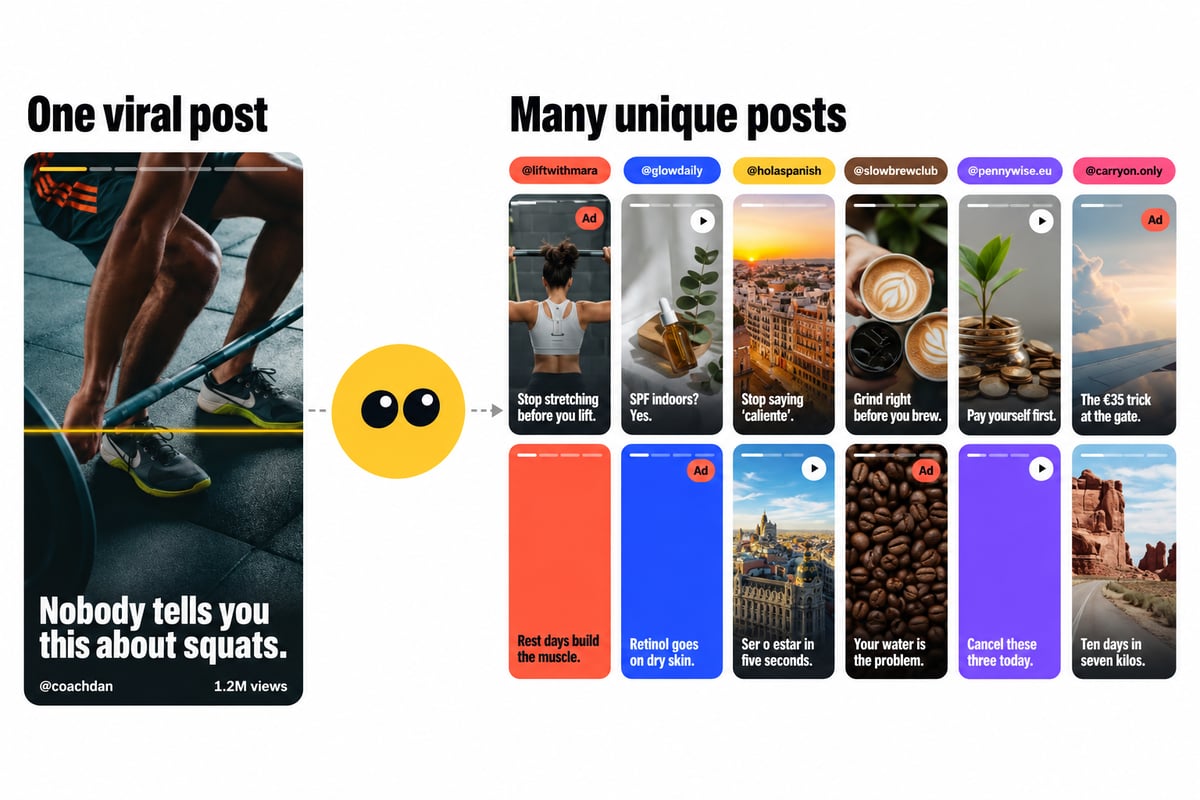
Smart advertisers don't start from scratch. They analyze successful content in their niche to understand what resonates, then create original variations applying those insights. This approach combines proven patterns with unique execution.
When you create your own ad campaigns at scale, starting from validated concepts dramatically improves your success rate. Instead of guessing what might work, you reverse-engineer winning formulas and apply them to your specific product, audience, and brand voice.
trendoo addresses this exact challenge by learning from viral posts in your niche and generating original social content that applies those insights. You paste a link to content that's performing well, and trendoo analyzes what made it succeed. Then it creates entirely new posts in your voice using your images, never copying but always starting from proven patterns. The platform helps you run multiple content profiles and accounts from one dashboard, tracking which posts went live, which are queued, and how each performs.
Building Repeatable Creative Systems
Sustainable ad production requires systems, not just inspiration. Document your creative process to enable consistent output across team members or campaigns.
Template libraries provide starting points while maintaining flexibility. Create master templates for your top-performing formats, then customize for each campaign. Include approved brand assets, color palettes, and messaging frameworks.
Content calendars prevent last-minute creative crises. Plan ad creative weeks in advance, aligning with product launches, seasonal trends, and campaign objectives. Build in buffer time for revisions and testing.
Feedback loops accelerate improvement. Review performance data weekly, identifying patterns in what works. Share insights across your team. Update templates and guidelines based on real results, not assumptions.
Navigating Legal and Ethical Considerations
Creating ads carries legal responsibilities that many first-time advertisers overlook. Compliance isn't optional, and violations can result in platform bans, regulatory fines, and brand damage.
Required Disclosures and Transparency
Advertising regulations vary by jurisdiction, but certain principles apply universally. Material connections must be disclosed clearly. If you're compensated for endorsements, viewers need to know. The FTC's guidance for online influencers outlines specific requirements for clear, conspicuous disclosures.
Claims require substantiation. Performance statistics, testimonials, and comparative statements need supporting evidence. "Our app increases productivity by 47%" demands documented research backing that specific claim.
AI and Generative Content Considerations
As generative AI becomes prevalent in ad creation, transparency questions intensify. Recent research from the Interactive Advertising Bureau shows consumer skepticism toward AI-generated advertising, particularly among younger demographics who value authenticity.
When you create your own ad using AI tools, consider these guidelines:
- Disclose AI involvement when it materially affects the content
- Ensure AI-generated claims are factually accurate
- Review all AI output for bias, appropriateness, and brand alignment
- Maintain human oversight of final creative decisions
- Use AI as an enhancement tool, not a replacement for strategic thinking
Accessibility and Inclusive Design
Accessible advertising isn't just ethical-it expands your potential audience. The Web Content Accessibility Guidelines (WCAG) provide standards for creating content that works for people with disabilities.
Practical Accessibility Implementation
Visual accessibility requires sufficient color contrast between text and backgrounds (minimum 4.5:1 ratio for normal text). Avoid conveying information through color alone-use icons, patterns, or text labels as well.
Text alternatives for images ensure screen readers can convey your message to visually impaired users. Write descriptive alt text that communicates the image's purpose, not just its content.
Video accessibility demands captions for deaf and hard-of-hearing viewers. Bonus: captions improve performance even for hearing viewers, as many watch video ads with sound off. Include audio descriptions for complex visual information when possible.
Motion sensitivity considerations matter for viewers with vestibular disorders. Avoid excessive flashing, strobing, or rapid movement. Provide options to pause auto-playing content.
| Accessibility Feature | Implementation | Benefit |
|---|---|---|
| Alt text | Descriptive image descriptions | Screen reader compatibility |
| Captions | Text overlay for audio content | Accessible to deaf viewers, sound-off viewing |
| Contrast ratio | 4.5:1 minimum for text | Readable for low-vision users |
| Pause controls | Stop auto-play animations | Reduces motion sensitivity issues |
Measuring Performance and Iterating
Creating ads is only half the equation. Understanding what works, why it works, and how to improve requires rigorous measurement and analysis.
Key Metrics by Campaign Objective
Different objectives demand different success metrics. Awareness campaigns track reach, impressions, and brand lift. Consideration campaigns measure engagement rate, click-through rate, and cost per engagement. Conversion campaigns focus on conversion rate, cost per acquisition, and return on ad spend.
Avoid vanity metrics that feel good but don't drive business results. Thousands of impressions mean nothing if none convert to meaningful actions. High engagement rates on awareness content don't matter if brand recall remains flat.
Attribution and Multi-Touch Analysis
Modern customer journeys rarely involve single touchpoints. Someone might see your Instagram ad, research your product later via Google, read reviews, then convert through a retargeting ad days later. Each touchpoint contributed, yet last-click attribution credits only the final ad.
Multi-touch attribution models distribute credit across the customer journey more fairly. First-click models credit the initial touchpoint. Linear models split credit evenly. Time-decay models weight recent interactions more heavily. Choose models aligned with your business reality and campaign objectives.
The 4A's resources on business development include frameworks for working with partners on attribution modeling and measurement planning.
Staying Current with Platform Changes
Social advertising platforms evolve constantly. Algorithm updates, new ad formats, policy changes, and feature rollouts can dramatically impact performance. When you create your own ad campaigns, building adaptability into your workflow prevents disruption when platforms shift.
Monitoring Industry Developments
Follow official platform blogs for Facebook, Instagram, TikTok, LinkedIn, and others you advertise on. They announce major changes, new features, and best practices directly.
Join advertiser communities where practitioners share real-world experiences with platform changes before they're widely documented. Reddit's advertising communities, industry Slack groups, and LinkedIn groups provide peer insights.
Test new features early when platforms offer beta access. Early adopters often receive preferential treatment in algorithms as platforms promote new capabilities. Features like Reels, Stories, or new interactive ad formats typically offer lower competition and better performance initially.
Building Platform-Agnostic Skills
While tactics change, fundamental advertising principles endure. Invest in understanding psychology, persuasion, storytelling, and design thinking rather than just tactical platform tricks. These skills transfer across platforms and remain relevant through algorithm changes.
Customer research never goes out of style. Deep understanding of your audience's motivations, pain points, and decision-making processes informs creative that works regardless of platform mechanics.
Creative excellence transcends platform. Compelling visuals, clear value propositions, and authentic messaging perform well everywhere. Master these fundamentals before obsessing over platform-specific hacks.

Budgeting and Resource Allocation
Financial planning determines which creative ambitions remain realistic. When you create your own ad campaigns, understanding cost structures helps you allocate resources effectively across production and media spend.
Production Cost Considerations
Creative production costs vary wildly based on format and quality standards. User-generated content (UGC) style ads might cost $50-200 per asset using freelance creators. Professional photography or videography runs $500-5,000+ per day depending on crew size and location requirements. Animation and motion graphics typically cost $1,000-10,000+ per finished minute.
In-house versus outsourced production involves tradeoffs. In-house teams provide brand knowledge, faster turnaround, and lower per-asset costs at scale. Outside agencies or freelancers bring fresh perspectives, specialized skills, and no ongoing employment costs. Many successful advertisers use hybrid models: in-house for routine production, specialists for flagship campaigns.
Media Spend Optimization
The 70-20-10 rule provides a useful starting framework: allocate 70% of budget to proven performers, 20% to promising experiments, and 10% to wild card tests. This balances consistent results with learning and innovation.
Start with minimum viable budgets when testing new platforms or audiences. Prove concepts work before scaling investment. Many platforms require $20-50 daily minimums for algorithm learning. Run tests for 7-14 days before evaluating results-shorter periods produce unreliable data.
Scaling winners intelligently prevents waste. When you find winning creative and audience combinations, increase budgets gradually (20-30% weekly) rather than doubling overnight. Sudden budget increases can disrupt algorithm learning and inflate costs.
Current trendoo pricing offers monthly plans at half price for the first month, making it easier to test scaled content production without major upfront investment.
Creating effective advertising combines strategic thinking, creative execution, systematic testing, and continuous optimization. The fundamental skills-understanding audiences, crafting compelling messages, and measuring results-remain constant even as platforms and technologies evolve. When you build repeatable systems for ad creation and leverage automation strategically, you can scale production while maintaining quality and authenticity. trendoo helps you start from proven viral patterns and generate original social content at scale, turning what works in your niche into posts that match your voice and drive your specific goals.