Create Your Own Post: The Complete Content Creation Guide
· 9 min read

Creating content that resonates with your audience while maintaining a consistent brand voice remains one of the most challenging aspects of digital marketing in 2026. Whether you're a solo creator, a marketing team, or a brand managing multiple accounts, the ability to create your own post from scratch requires a strategic approach that balances creativity with data-driven insights. This comprehensive guide walks through the entire process, from initial concept to final publication, giving you the tools to produce content that performs.
Understanding Your Content Foundation
Before you create your own post, you need to establish a solid foundation. This means understanding who you're writing for, what they care about, and how your content fits into the broader digital landscape.
Audience research is non-negotiable. Start by analyzing your existing followers, subscribers, or customers. What questions do they ask? Which topics generate the most discussion? What time zones are they in, and when are they most active online?
Building Your Content Profile
The most successful creators don't reinvent themselves with every piece of content. Instead, they develop a recognizable style that becomes their signature. This includes:
- Tone of voice: Professional, casual, humorous, authoritative, or conversational
- Content format: Short-form text, long-form analysis, visual storytelling, or mixed media
- Visual elements: Color schemes, typography, image treatments, and graphic styles
- Messaging angles: Educational, inspirational, entertaining, or problem-solving
When you create your own post consistently within this framework, your audience begins to recognize your content immediately, even before they see your name or logo.

Analyzing What Works
Smart content creators in 2026 don't guess what might perform well. They study what's already working. Look at posts in your niche that are generating significant engagement. What patterns emerge?
| Success Factor | What to Look For | Why It Matters |
|---|---|---|
| Hook strength | First sentence grabs attention | Determines scroll-stopping power |
| Content structure | Clear formatting, scannable layout | Affects completion rates |
| Visual appeal | High-quality images, brand consistency | Drives initial engagement |
| Call to action | Clear next step for readers | Converts engagement to results |
According to Google's guidance on creating helpful content, the focus should always be on delivering genuine value to your audience rather than optimizing purely for algorithms.
The Pre-Writing Phase
When you're ready to create your own post, resist the urge to jump straight into writing. The most effective content starts with thorough planning.
Topic selection determines everything that follows. Your topic should sit at the intersection of three circles: what your audience cares about, what you have expertise in, and what supports your business goals. Miss any of these three, and your content will underperform.
Research and Outline Development
- Gather source material from industry reports, competitor content, customer feedback, and trending discussions
- Identify your unique angle that differentiates your perspective from existing content
- Map your key points in a logical sequence that builds toward your main message
- Collect supporting data including statistics, quotes, examples, and case studies
- Plan your visual elements to complement and enhance your written content
This systematic approach, recommended by Yoast's guide to writing blog posts, ensures you create your own post with purpose rather than simply filling space.
Setting Your Content Parameters
Before writing a single word, define your constraints:
- Target length: How deep will you go on this topic?
- Format requirements: Text-only, images, video, carousel, or mixed?
- Publication timeline: When does this need to be ready?
- Distribution channels: Where will this post live?
Clear parameters prevent scope creep and keep your content focused.
Crafting Compelling Content
Now comes the creative work. When you create your own post, you're not just sharing information. You're crafting an experience that captures attention, delivers value, and inspires action.
Start with your hook. The first sentence determines whether someone keeps reading or scrolls past. Your opening should create curiosity, promise value, or present a surprising insight. Avoid generic statements that could apply to any post on any topic.
Writing for Scannable Readability
Online readers don't read linearly. They scan, jump, and skim. The Nielsen Norman Group's research on web writing shows that scannable content performs significantly better than dense text blocks.
Structure your content for scanning:
- Use descriptive subheadings that convey meaning even when read in isolation
- Break up long paragraphs into shorter, digestible chunks
- Incorporate bullet points for lists, features, and key takeaways
- Bold important concepts to help scanners identify main ideas quickly
- Add visual breaks with images, quotes, or white space
Short paragraphs create breathing room.
They make your content less intimidating and more approachable, especially on mobile devices where the majority of social content is consumed.

Maintaining Your Voice Consistency
One of the biggest challenges when you create your own post at scale is maintaining a consistent voice across all content. Your voice is the personality that comes through in your writing.
Voice consistency builds trust. When your audience encounters your content, they should immediately sense it's you, whether they're reading a short social post or a long-form article. This consistency doesn't mean every post sounds identical; it means they share recognizable DNA.
For businesses managing multiple accounts or content profiles, this becomes even more critical. You might need different voices for different audiences or platforms, but each voice should remain internally consistent.
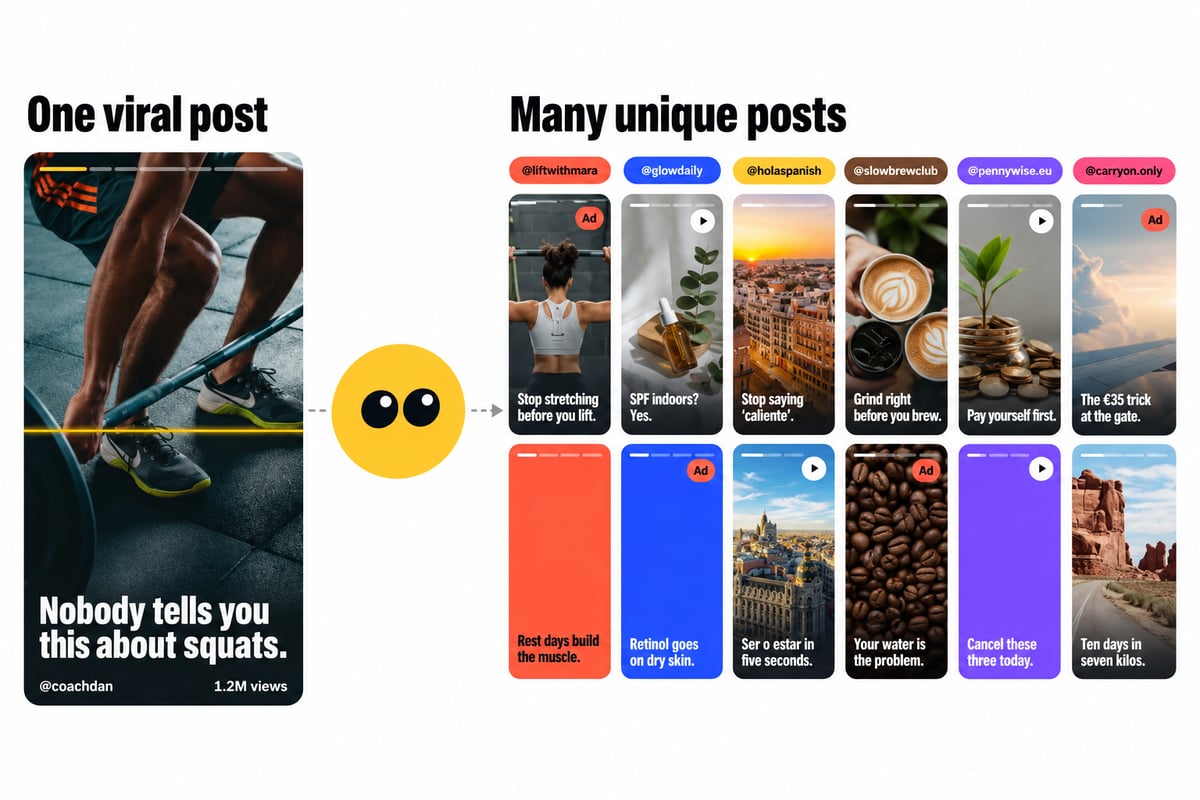
trendoo addresses this challenge by learning from posts you like and turning them into reusable content profiles. Instead of manually ensuring every post matches your style, you can paste examples of posts that perform well in your niche, and the platform analyzes what makes them work while keeping your unique voice intact. This approach lets you scale content production without sacrificing the authentic style that makes your posts recognizable.
Optimizing for Performance
Creating great content is only half the battle. To maximize impact when you create your own post, you need to optimize for both human readers and the platforms where you publish.
Technical Optimization Checklist
Metadata matters more than most creators realize. When you share your post on social platforms, the metadata determines how it displays. According to web.dev's guide to HTML metadata, properly configured Open Graph and Twitter Card tags significantly improve click-through rates.
- Title tags (50-60 characters)
- Meta descriptions (140-160 characters)
- Open Graph images (1200×630 pixels minimum)
- Alt text for all images
- Structured data markup when applicable
For those publishing through content management systems or static site generators, GitHub's documentation on Jekyll and Markdown provides technical guidance on formatting and publishing posts efficiently.
Accessibility and Inclusivity
When you create your own post, you're creating for everyone who might read it. Accessibility isn't just ethical; it's practical, expanding your potential audience.
The Web Content Accessibility Guidelines (WCAG) outline standards for making content accessible to people with disabilities. Key considerations include:
| Accessibility Element | Implementation | Impact |
|---|---|---|
| Text alternatives | Alt text for images | Screen reader compatibility |
| Color contrast | Minimum 4.5:1 ratio for body text | Readability for visual impairments |
| Heading hierarchy | Proper H2, H3, H4 structure | Navigation and comprehension |
| Link descriptions | Descriptive anchor text | Context for all users |
These practices improve the experience for all readers, not just those using assistive technologies.
Visual Content Integration
Text alone rarely cuts through the noise in 2026. When you create your own post, visual elements play a crucial role in stopping scrollers and conveying information quickly.
Images should work with your text, not just decorate it. Every visual element should serve a purpose: illustrating a concept, providing data, breaking up text, or reinforcing your brand identity.
Sourcing and Creating Visuals
You have several options for visual content:
- Original photography that shows your product, team, or behind-the-scenes moments
- Custom graphics designed specifically for your post using tools like Canva or Figma
- Licensed stock images from reputable sources with proper attribution
- User-generated content shared with permission from your community
- Data visualizations that transform statistics into understandable graphics
When using content created by others, familiarize yourself with Creative Commons licensing to ensure you're respecting copyright and attribution requirements.

Optimizing Images for Different Platforms
Each social platform has its own optimal image dimensions and file size requirements. When you create your own post for multiple channels, you'll need versions optimized for each:
- Instagram feed: 1080×1080 (square) or 1080×1350 (portrait)
- Instagram Stories: 1080×1920 (9:16 ratio)
- Twitter: 1200×675 (16:9 ratio)
- LinkedIn: 1200×627 for link previews
- Facebook: 1200×630 for shared links
Compression is equally important. Large file sizes slow load times and hurt engagement, especially for users on mobile connections.
Content Calendar and Consistency
Individual posts matter, but consistent posting creates momentum. When you create your own post regularly, you build audience expectations and algorithmic favor.
Consistency beats perfection. Publishing good content regularly outperforms sporadic brilliant content. Your audience needs to know when to expect new posts from you.
Planning Your Content Schedule
- Audit your capacity: How many quality posts can you realistically create per week or month?
- Map to audience behavior: When is your audience most active and receptive?
- Balance content types: Mix educational, entertaining, and promotional content
- Build in flexibility: Leave room for timely, reactive content
- Batch creation: Produce multiple posts in dedicated creation sessions
For creators managing multiple accounts and profiles, centralized planning tools become essential to maintaining consistent output across all channels without losing your mind.
Measuring and Improving
Every post you publish generates data. Smart creators use this feedback loop to improve their craft.
Key Performance Indicators
When you create your own post, track metrics that align with your goals:
| Goal Type | Primary Metrics | Secondary Metrics |
|---|---|---|
| Awareness | Impressions, reach | Profile visits, follows |
| Engagement | Likes, comments, shares | Saves, time on post |
| Conversion | Click-through rate, signups | Cost per conversion |
| Retention | Return visitors, followers | Unfollow rate |
Not all engagement is equal. A save often indicates higher value than a like, and a comment usually beats a simple reaction. Pay attention to which posts generate the most valuable types of engagement for your goals.
Testing and Iteration
The best content creators treat every post as an experiment. Try variations in:
- Hook styles: Questions vs. statements vs. provocative claims
- Content length: Short punchy posts vs. detailed deep dives
- Visual treatments: Different image styles, colors, or layouts
- Posting times: Different days and times to find your sweet spot
- Call-to-action approaches: Direct vs. subtle, single vs. multiple options
Document what you learn. Over time, patterns emerge that guide your content strategy with increasing precision.
Scaling Your Content Production
As your content needs grow, the challenge shifts from creating individual posts to maintaining quality at scale. When you need to create your own post dozens or hundreds of times per month, manual creation becomes unsustainable.
Systems enable scale. The creators and brands producing high volumes of quality content aren't superhuman; they've built systems that make production efficient without sacrificing authenticity.
Building Repeatable Processes
- Template development: Create frameworks for common post types
- Content banks: Maintain libraries of images, quotes, and ideas
- Style documentation: Write down your voice, tone, and formatting rules
- Review workflows: Establish clear approval processes
- Publishing automation: Schedule posts in advance when appropriate
These systems don't make your content generic; they free you from reinventing the wheel every time so you can focus creative energy where it matters most.
Platform-Specific Considerations
While core content principles remain consistent, each platform has its own culture and best practices. When you create your own post for different channels, adapt your approach accordingly.
Instagram rewards visual storytelling. High-quality images and short, punchy captions perform best. Use the first line as a hook since it's all that shows before "more."
LinkedIn favors professional insights. Longer-form posts work well when they provide genuine business value. Industry analysis, career advice, and thought leadership resonate.
Twitter demands brevity and timing. Threads allow longer narratives, but each tweet must stand alone. Jump on trending topics quickly when relevant.
TikTok and YouTube Shorts require video. Even if you're primarily a text creator, understanding short-form video is increasingly important for reach.
The most successful creators don't simply cross-post identical content everywhere. They adapt their core message to each platform's strengths while maintaining their recognizable voice.
Creating content that performs requires balancing creativity with strategy, consistency with adaptation, and quality with volume. By understanding your audience, developing your unique voice, optimizing for both humans and algorithms, and building sustainable systems, you can create your own post at any scale without burning out or sacrificing authenticity. When you're ready to scale your content production while maintaining the style that makes your posts recognizable, trendoo learns from what's already working in your niche and helps you produce original posts that start from proven concepts in your voice.