Generate App: Build and Scale Social Content Automation
· 8 min read

The ability to generate app solutions quickly has become essential for businesses looking to scale their social media presence in 2026. Whether you're a content creator managing multiple accounts or a brand trying to maintain consistent engagement across platforms, the right application framework can mean the difference between manual burnout and automated success. Modern app generation tools have evolved beyond simple scaffolding to include sophisticated automation capabilities, particularly in the social content space where speed and consistency determine competitive advantage.
Understanding Modern App Generation Frameworks
When you generate app infrastructure today, you're not just creating a basic skeleton. Modern frameworks provide complete ecosystems that handle everything from user authentication to real-time data processing. The shift toward automation-first architecture means that the applications we build in 2026 prioritize workflow efficiency and scale from day one.
Key considerations when choosing a framework:
- Deployment speed: How quickly can you move from concept to production?
- Scalability architecture: Will it handle hundreds of accounts without performance degradation?
- Integration capabilities: Does it connect seamlessly with social platforms and APIs?
- Security foundations: Are secure coding practices built into the generated code?
The Vite documentation demonstrates how modern build tools have transformed the way we scaffold web applications, making it possible to generate app structures in seconds rather than hours. This speed advantage becomes critical when you need to iterate quickly based on market feedback or emerging trends.

Selecting the Right Generation Approach
Not all app generation methods suit every use case. For social content automation, you need frameworks that excel at handling asynchronous operations, API rate limiting, and multi-tenant architectures. Traditional monolithic approaches fall short when managing dozens of social accounts simultaneously.
Consider these architectural patterns:
| Pattern Type | Best For | Scalability | Complexity |
|---|---|---|---|
| Serverless Functions | Event-driven tasks | High | Medium |
| Microservices | Complex workflows | Very High | High |
| Monolithic with Workers | Predictable loads | Medium | Low |
| Hybrid Architecture | Mixed requirements | High | Medium |
When you generate app components for content automation, the serverless and hybrid approaches often provide the best balance. They allow individual posting workflows to scale independently while maintaining centralized control over brand voice and content profiles.
Security Considerations in Generated Code
Every application you generate app starts with a security posture, whether intentional or accidental. The rise of AI-assisted code generation has introduced new vulnerabilities that require careful attention. The OWASP Cheat Sheet on Secure Coding when using AI tools outlines critical mitigations for prompt injection and other AI-specific risks.
Essential security layers for automated social apps:
- API credential management: Never hardcode tokens or keys in generated code
- Input validation: Sanitize all user-provided content before processing
- Rate limit enforcement: Protect both your infrastructure and third-party APIs
- Audit logging: Track every action across all managed accounts
- Access controls: Implement role-based permissions for team members
The OWASP Secure Coding Practices Quick Reference Guide provides a technology-agnostic checklist that applies regardless of which framework you use to generate app infrastructure. These practices become especially important when handling multiple social media accounts, where a single security breach could compromise entire brand networks.
Integrating Security into the Development Lifecycle
Modern DevSecOps practices recognize that security cannot be an afterthought. The NIST NCCoE DevSecOps project offers guidance on integrating security controls into every phase of development, including when using generated or AI-assisted code.
For social content automation platforms, this means:
- Pre-commit scanning of generated code for credential leaks
- Automated dependency audits to catch vulnerable packages
- Runtime monitoring of API calls and content generation patterns
- Regular penetration testing of authentication flows
Building Content Automation Intelligence
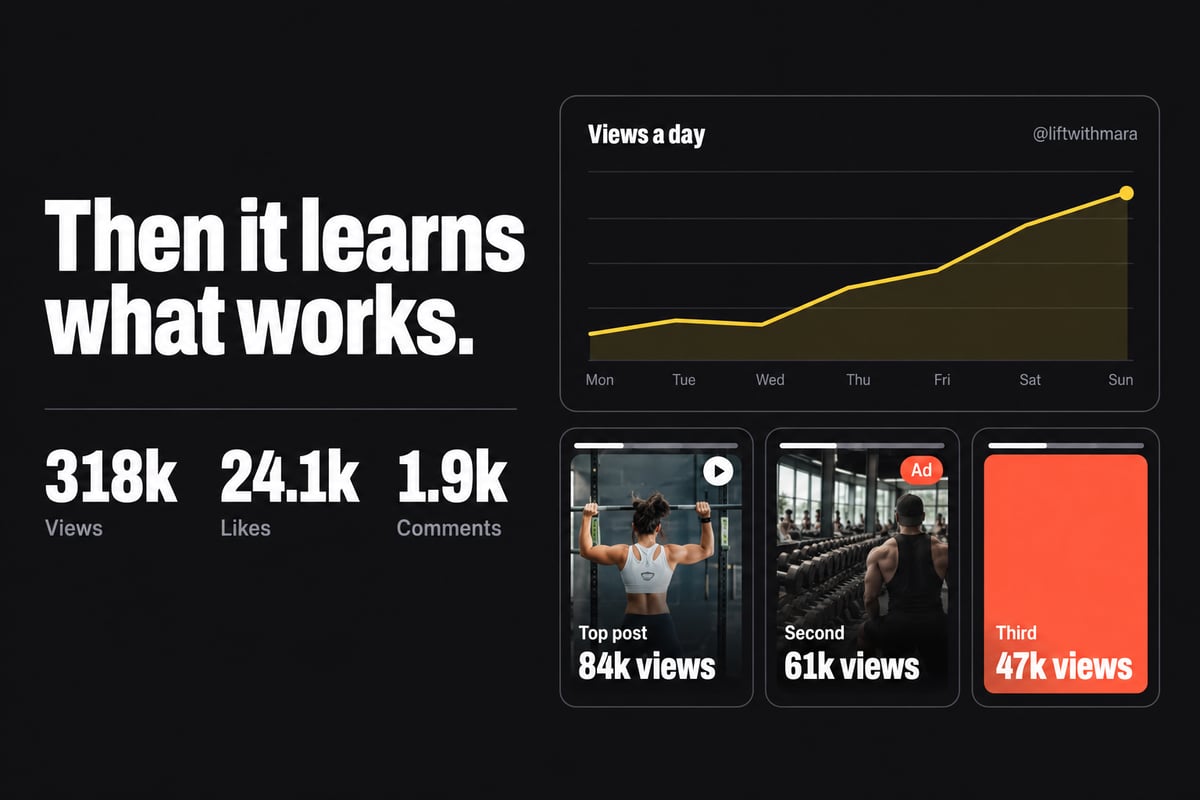
The real value emerges when you generate app logic that learns from successful content. Basic posting automation handles scheduling and distribution, but intelligent systems analyze engagement patterns and adapt content strategies accordingly. This requires incorporating machine learning pipelines into your application architecture.
When viral content appears in your niche, the ability to analyze its structure and replicate its success without plagiarism creates sustainable competitive advantage. This is where platforms like trendoo excel-by learning from proven viral posts and generating original content that captures the same engagement drivers while maintaining your unique voice and brand identity.
Pattern Recognition in Viral Content
Modern content automation doesn't mean generic templates. It means understanding why specific posts succeed and applying those principles to your original content. The application logic you generate app must include:
- Engagement metric tracking across posting time, format, and topic
- A/B testing infrastructure for continuous optimization
- Content profile management that captures voice and style
- Multi-account orchestration with centralized analytics

Short, punchy paragraphs keep readers engaged.
But longer explanatory sections provide necessary depth when discussing technical architectures and implementation strategies that require more comprehensive explanation.
Optimizing AI-Assisted Code Generation
Research into optimizing AI-assisted code generation reveals that the quality of generated applications depends heavily on prompt engineering and validation strategies. When you generate app code using AI tools, understanding these optimization techniques ensures better outcomes.
Effective AI generation strategies:
- Start with detailed requirements documents rather than vague prompts
- Validate generated code against established security baselines
- Use iterative refinement rather than single-pass generation
- Maintain human oversight of critical business logic
- Document all generated components for future maintenance
The Code.mil AI4SDLC playbook provides practical recommendations for adopting generative AI in software development with appropriate risk mitigation. These guidelines apply directly to building social content automation platforms where code quality impacts both performance and brand reputation.
Ensuring Generated Code Security
Recent research on making AI-generated code more secure and auditable suggests specific approaches for validation and verification. When you generate app components for production use, these practices become mandatory rather than optional.
| Security Practice | Implementation | Verification Method |
|---|---|---|
| Static Analysis | Pre-commit hooks | Automated scanners |
| Dependency Audit | Weekly scans | CVE monitoring |
| Code Review | Pull request gates | Team validation |
| Penetration Testing | Quarterly assessments | Third-party audits |
| Runtime Monitoring | Continuous logging | Anomaly detection |
Scaling Multi-Account Management
The complexity of social content automation increases exponentially with account count. When you generate app architecture for this use case, database design and queue management become critical success factors. A single-account posting solution rarely scales cleanly to hundreds of managed profiles.
Database design considerations:
- Account isolation: Separate schemas or logical partitions prevent cross-contamination
- Content versioning: Track every post variation and performance metric
- Profile storage: Maintain style guides, brand assets, and voice parameters
- Analytics aggregation: Roll up metrics across accounts while preserving granularity
- Audit trails: Immutable logs of all actions for compliance and debugging
The MDN Web Docs on web frameworks provide foundational knowledge for understanding how modern frameworks handle these data challenges. Whether you choose PostgreSQL with row-level security or MongoDB with tenant-based collections, the architecture decisions you make when you generate app infrastructure will determine scaling limits.
Queue Management and Rate Limiting
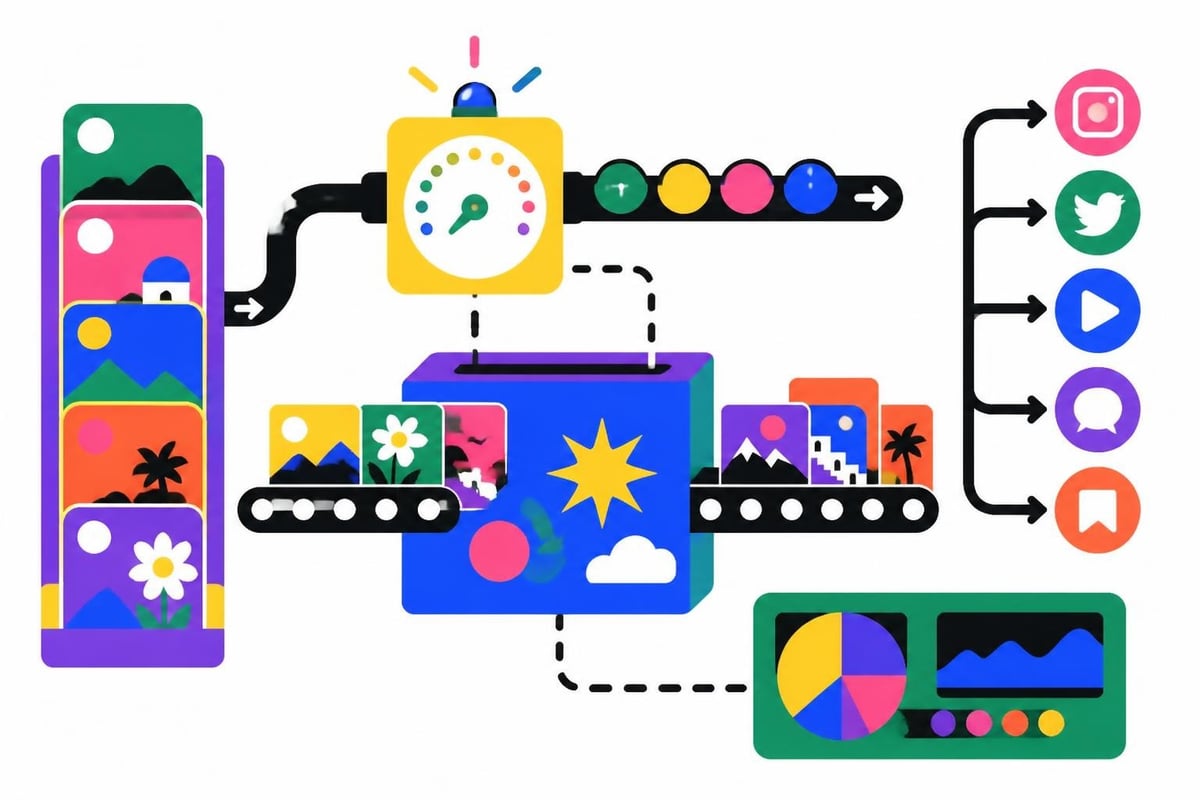
Social platforms enforce strict API limits. Your application must respect these boundaries while maximizing throughput across hundreds of accounts. This requires sophisticated queue management:
- Per-account rate limiters that track API usage windows
- Priority queues for time-sensitive posts versus bulk operations
- Retry logic with exponential backoff for transient failures
- Dead letter queues for failed posts requiring manual intervention
Framework Selection for Content Automation
When you generate app foundations for social content automation, framework choice determines developer productivity, maintenance burden, and feature velocity. The landscape in 2026 offers mature options across multiple paradigms.
Popular framework categories:
| Framework Type | Examples | Strengths | Ideal For |
|---|---|---|---|
| Full-stack Meta | Next.js, Nuxt | Integrated frontend/backend | Content-heavy apps |
| API-first | Express, Fastify | Flexibility, performance | Headless automation |
| Real-time | Socket.io, Meteor | Live updates | Collaborative tools |
| Serverless | Cloudflare Workers, Lambda | Auto-scaling | Variable workloads |
Each category brings trade-offs. Full-stack frameworks accelerate initial development but may include unnecessary features for backend-focused automation. API-first approaches offer maximum flexibility but require more boilerplate when you generate app components.
Balancing Development Speed and Customization
The fastest path to production often involves accepting framework opinions and conventions. However, social content automation frequently requires custom workflows that don't fit standard patterns. Finding the right balance requires understanding your specific requirements before you generate app scaffolding.
Consider starting with a minimal core and adding capabilities incrementally. This approach allows you to validate assumptions with real usage before committing to complex architectures. The ability to iterate quickly often matters more than architectural purity in competitive content markets.
Content Profile Management Architecture
Sophisticated social automation requires maintaining detailed profiles that capture brand voice, style preferences, and content parameters. When you generate app data models for this purpose, consider both current needs and future expansion.
Essential profile components:
- Voice parameters: Tone, formality level, vocabulary preferences
- Visual style guides: Color palettes, image treatments, layout templates
- Topic taxonomies: Subject categories, keyword sets, content themes
- Performance baselines: Historical metrics that define success thresholds
- Brand constraints: Prohibited language, required disclaimers, compliance rules
These profiles power content generation engines that create on-brand posts at scale. The application you generate app must make profile management intuitive for non-technical users while maintaining the precision needed for consistent brand representation.
Version Control for Content Strategies
Content strategies evolve. What worked in Q1 may fail in Q4. Your application architecture should treat content profiles as versioned documents with full history and rollback capabilities. This allows teams to experiment with new approaches while preserving proven strategies.
Implement profile versioning with:
- Timestamped snapshots of every configuration change
- A/B testing frameworks that compare profile versions
- Performance attribution linking posts to generating profiles
- Rollback mechanisms for reverting unsuccessful changes
Performance Optimization at Scale
When you generate app infrastructure for hundreds of concurrent content operations, performance optimization moves from nice-to-have to business-critical. Database query patterns, caching strategies, and resource allocation directly impact operational costs and user experience.
High-impact optimization areas:
- Connection pooling: Reuse database connections across requests
- Content caching: Store generated posts before distribution
- Asset CDN delivery: Serve images and videos from edge locations
- Background job processing: Offload heavy operations from request cycles
- Database indexing: Optimize frequent query patterns
Modern deployment platforms offer performance monitoring that reveals bottlenecks in generated applications. Tools like Vercel Analytics, Railway Metrics, and CloudFlare Insights provide real-time visibility into response times, error rates, and resource utilization across your infrastructure.
Cost Management Through Efficient Architecture
Scaling content automation can become expensive without careful architectural planning. When you generate app components, consider the cost implications of each design decision. Serverless functions minimize idle costs but increase with volume. Dedicated servers provide predictable pricing but require capacity planning.
The optimal approach often combines multiple strategies: serverless for variable workloads, dedicated resources for predictable tasks, and aggressive caching to minimize processing overhead. Check trendoo pricing to see how professional platforms structure their offerings around these considerations.
Monitoring and Analytics Infrastructure
Production social content automation requires comprehensive monitoring. When you generate app infrastructure, build observability into every layer rather than retrofitting it later. Logs, metrics, and traces should flow automatically from all components.
Critical monitoring dimensions:
- System health: Server uptime, error rates, resource utilization
- Content performance: Engagement metrics, reach, conversion tracking
- API status: Third-party service availability and rate limit consumption
- User activity: Account actions, profile changes, campaign management
- Security events: Failed authentications, suspicious patterns, policy violations
Centralized dashboards aggregate these signals into actionable insights. Teams should know immediately when posts fail to publish, engagement drops unexpectedly, or API limits approach thresholds. The application you generate app must surface problems before they impact business outcomes.
Building scalable social content automation requires thoughtful application architecture that balances development speed, security, and operational efficiency. Whether you generate app infrastructure from scratch or adopt existing platforms, the principles of multi-account management, content intelligence, and robust monitoring apply universally. trendoo handles the complexity of learning from viral content and generating original posts at scale, letting you focus on strategy while the platform manages the technical challenges of coordinating hundreds of accounts, maintaining brand consistency, and optimizing engagement across every post.