Make Your Own Post: A Strategic Guide for 2026
· 9 min read

The ability to make your own post that resonates with your audience has become the cornerstone of digital marketing success in 2026. As platforms evolve and algorithms prioritize authentic, engaging content, brands and creators face mounting pressure to produce fresh posts consistently while maintaining quality and voice. The traditional approach of manual creation doesn't scale, yet copying what works risks brand damage and platform penalties. This guide explores how to build a sustainable system that lets you make your own post at scale while preserving originality and strategic intent.
Understanding the Modern Content Landscape
Social media consumption patterns have shifted dramatically. According to Pew Research Center's analysis of social media trends, audiences now expect a constant stream of relevant content across multiple platforms. The challenge isn't just volume but maintaining authentic voice across every post.
When you make your own post, you're competing against millions of pieces of content published daily. Success requires understanding what drives engagement in your specific niche. Pattern recognition has become essential: identifying which formats, hooks, and structures consistently perform well gives you a foundation to build upon.
The Three Pillars of Scalable Content Creation
Building a system to make your own post efficiently requires three core elements working in harmony:
- Analysis framework - Understanding why successful posts work
- Voice consistency - Maintaining your brand identity across all content
- Production workflow - Creating original posts without reinventing the wheel each time
Each pillar supports the others. Analysis without consistent voice produces scattered messaging. Voice without workflow doesn't scale. Workflow without analysis leads to content that misses the mark.

Reverse-Engineering What Works
The smartest approach to make your own post starts with studying proven winners. This doesn't mean copying, it means understanding the underlying mechanics that drive engagement. A viral post in your niche contains valuable signals about timing, format, emotional triggers, and structural elements that resonate with your target audience.
Pattern extraction involves breaking down successful content into its component parts. What's the opening hook? How is information structured? What call-to-action drives comments or shares? When you systematically analyze posts that perform well, you build a mental (or actual) database of effective techniques.
Consider these key elements to examine:
- Hook effectiveness - First sentence or frame that stops scrolling
- Information density - Balance between value and readability
- Visual hierarchy - How text and images guide attention
- Engagement triggers - Questions, challenges, or emotional appeals
- Format choices - Carousel, video, single image, or text-only
| Element | Why It Matters | How to Apply |
|---|---|---|
| Opening Hook | Determines whether users stop scrolling | Test multiple angles on the same topic |
| Story Arc | Maintains attention through the post | Structure information as problem-solution |
| Visual Breaks | Prevents wall-of-text fatigue | Use line breaks, emojis, or formatting |
| Call-to-Action | Converts passive viewers to engaged participants | Ask specific questions or prompt sharing |
This analytical approach, informed by Google's guidance on creating helpful content, ensures your posts serve audience needs while achieving business goals.
Building Your Content Profile
To make your own post consistently in a recognizable style, you need a defined content profile. This isn't a rigid template but a flexible framework that captures your voice, typical formats, and brand personality. Think of it as the DNA that makes your content instantly recognizable.
Your content profile should document:
- Tone and vocabulary - Formal vs. casual, technical vs. accessible
- Sentence structure preferences - Short and punchy vs. detailed and flowing
- Recurring themes - Topics and angles that align with your expertise
- Visual signatures - Color schemes, font choices, image treatments
The most effective profiles emerge from analyzing your own best-performing content. Identify three to five posts that represent your brand at its best. What do they have in common? Those patterns become your style guide.
From Profile to Production
Once you've established a content profile, making each new post becomes systematically faster. You're not starting from a blank page, you're working within proven parameters that already resonate with your audience. This is where Yoast's guidance on blog post structure becomes particularly valuable, even when applied to social content.
When you make your own post using a defined profile, you maintain consistency while allowing room for creativity. The profile provides guardrails, not constraints. Each post should feel fresh and responsive to current trends while unmistakably belonging to your brand family.
Scaling Across Multiple Accounts
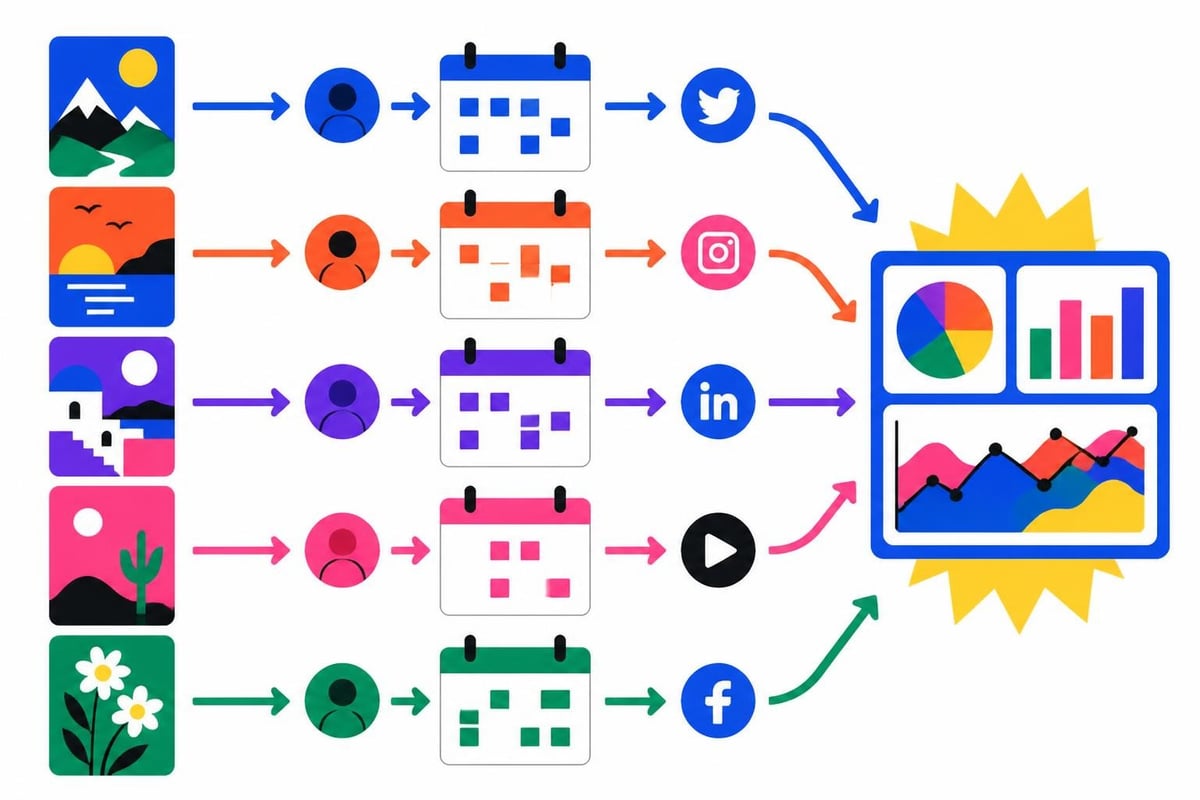
Many businesses and creators manage content for several brands, products, or audience segments. The ability to make your own post at scale across these different entities requires systematic organization and clear separation between profiles.
Multi-account management demands three critical capabilities:
- Distinct voice profiles for each brand or segment
- Centralized oversight of all scheduled and published content
- Performance tracking to understand what works where
Different audiences respond to different approaches. Your B2B SaaS content requires a different profile than your consumer app. Your Instagram audience expects different formats than your LinkedIn followers. Effective scaling respects these differences while maintaining operational efficiency.
The Originality Imperative
When you make your own post, genuine originality isn't optional, it's essential. Platforms increasingly penalize duplicated or slightly modified content. Audiences can spot recycled material instantly. Your reputation depends on bringing fresh perspective and authentic voice to every piece.
Original content doesn't mean inventing entirely new ideas. It means expressing proven concepts in your unique way, filtered through your experience and perspective. You can discuss the same topic as competitors while offering distinctive value through your specific insights, examples, and presentation.
The structured approach to semantic markup for blog posts applies equally to social content. Each post should stand alone as a complete, valuable piece of communication, not a hollow echo of something else.
Maintaining Voice at Volume
The challenge intensifies when you need to make your own post daily or multiple times per day. How do you maintain authentic voice when producing high volumes? The answer lies in systems that capture and apply your style automatically while generating genuinely new content each time.
This is precisely where trendoo transforms the content creation process. You paste a link to a post that's performing well in your niche, and trendoo analyzes what makes it effective. Then it creates original posts in your established style, using your images and promoting your products. Every word is new, every post is yours, but you're building from patterns that already prove successful.
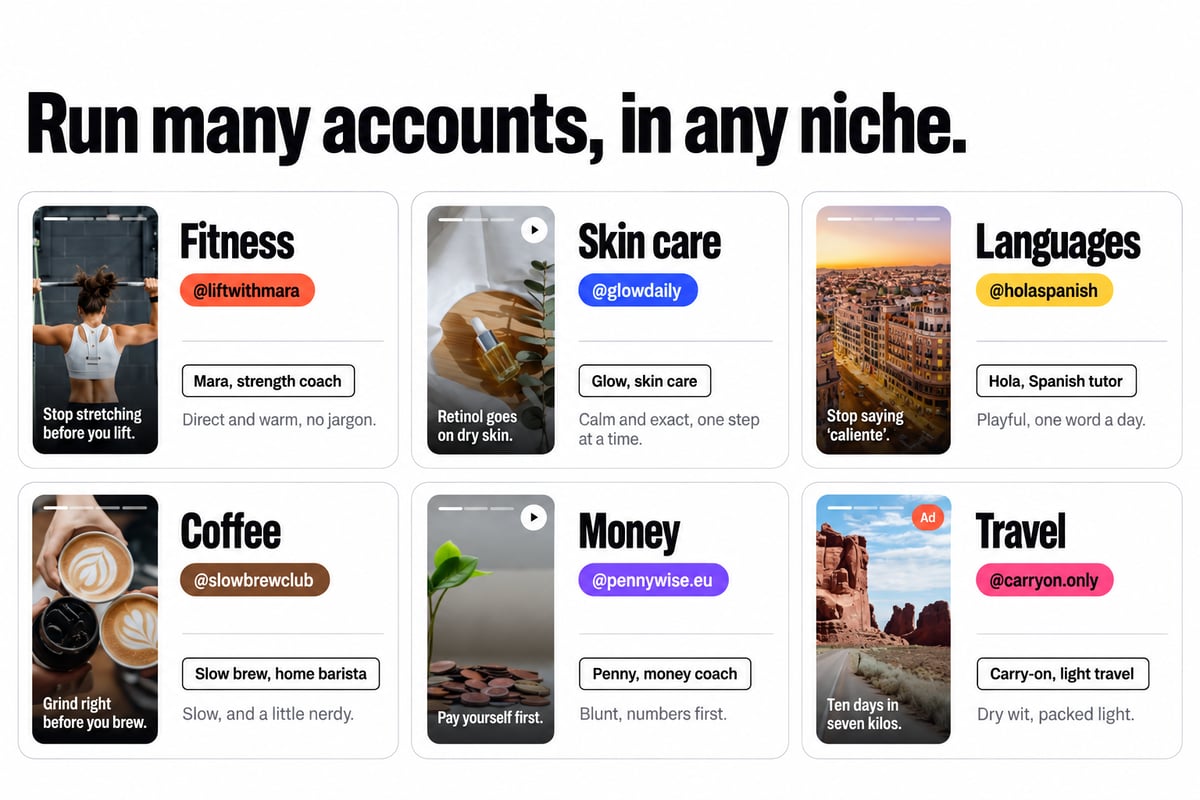
Consider how this changes your workflow. Instead of spending hours crafting each post from scratch, you focus on strategy and oversight while maintaining complete control over voice and quality. You can run many profiles and accounts from one place, tracking which posts are live, which are scheduled, and how each one performs.
Visual Content Integration
Modern posts rarely succeed with text alone. When you make your own post in 2026, visual elements often determine whether users engage or scroll past. Images, videos, and graphics must align with your content profile while following accessibility best practices that make content usable for all audiences.
Strategic visual integration involves several considerations:
- Relevance - Every image should add value, not just fill space
- Rights management - Using properly licensed or original visuals
- Alt text - Descriptive text for accessibility and context
- Format optimization - Right dimensions and file sizes for each platform
- Brand consistency - Visual style that reinforces your content profile
| Visual Type | Best Use Case | Production Tip |
|---|---|---|
| Original photography | Product showcases, behind-the-scenes content | Maintain consistent lighting and composition |
| Data visualization | Statistics, performance metrics, comparisons | Simplify complex data for mobile viewing |
| Text overlays | Quote posts, key takeaways, announcements | Ensure contrast ratio meets accessibility standards |
| Video clips | Tutorials, demonstrations, stories | Front-load value in first three seconds |
The Creative Commons licensing framework provides clear guidance when incorporating third-party visual elements into your posts, protecting both you and the original creators.
Performance Measurement and Iteration
You can't improve what you don't measure. When you make your own post, tracking performance reveals which elements drive results and which fall flat. Modern content creation is iterative: each post informs the next, building institutional knowledge about what resonates with your specific audience.
Key Metrics to Track
Different goals require different metrics. A brand awareness campaign watches reach and impressions. Lead generation focuses on click-through rates and conversions. Community building prioritizes comments and shares.
Essential performance indicators include:
- Engagement rate - Comments, shares, saves relative to reach
- Click-through rate - For posts with external links
- Follower growth - Net change after each post
- Save/bookmark rate - Indicates lasting value
- Completion rate - For video or carousel content
Track these metrics not just per post but across content types, topics, and formats. You're looking for patterns: which approaches consistently outperform others? This data directly informs your content profile refinement.

Automation Without Sacrificing Authenticity
The fear with scaling content production is losing the human touch that makes posts compelling. When you make your own post using automation tools, the goal is amplifying your capabilities, not replacing your judgment or voice. Strategic automation handles repetitive tasks while preserving creative control.
Effective automation focuses on:
- Pattern recognition and analysis
- Format generation based on proven structures
- Scheduling and distribution logistics
- Performance data compilation
What automation shouldn't touch: strategic decisions, final approval, brand-critical messaging, and crisis response. Technology accelerates production but humans maintain quality and appropriateness.
SEO-friendly content principles apply to social posts just as they do to long-form articles. Clear structure, relevant keywords, and genuine value create posts that platforms reward with distribution and audiences reward with engagement.
Platform-Specific Optimization
When you make your own post, one size doesn't fit all platforms. Instagram prioritizes visuals and hashtags. LinkedIn rewards professional insights and industry commentary. Twitter demands brevity and timeliness. Your content profile must flex to accommodate platform requirements while maintaining core voice.
Consider these platform-specific adaptations:
- LinkedIn - Longer-form text, professional framing, industry insights
- Instagram - Visual-first, story-driven captions, strategic hashtag use
- Twitter - Concise hooks, thread potential, real-time relevance
- Facebook - Community engagement, longer video, diverse formats
- TikTok - Trend participation, authentic personality, quick pacing
The strategic approach is creating a master post concept, then adapting it appropriately for each platform rather than creating entirely separate content for each. This maintains message consistency while respecting platform cultures.
Rights, Attribution, and Ethics
As you scale the volume of content you produce, proper licensing and attribution practices become increasingly important. When you make your own post using any external resources, images, data, or inspiration, transparency and proper crediting protect your reputation and respect creator rights.
Ethical content creation in 2026 means:
- Clear attribution for quotes, data, or concepts from others
- Proper licensing for all visual and audio elements
- Transparent AI use when applicable to your process
- Original analysis even when discussing trending topics
Building a sustainable content operation requires systems that track sources and maintain attribution records. This isn't just legal protection, it's building trust with your audience and the broader creator community.
Advanced Scheduling Strategies
Timing significantly impacts performance when you make your own post. Understanding when your specific audience is most active and receptive allows you to maximize reach and engagement from each piece of content you create.
Scheduling optimization involves:
- Audience analysis - When your followers are online and active
- Competition awareness - Avoiding oversaturated posting windows
- Platform algorithms - Understanding how each platform weights recency
- Content type - Different formats perform better at different times
- Testing and refinement - Systematically experimenting with timing
| Time Zone Consideration | Strategy | Why It Matters |
|---|---|---|
| Primary audience location | Schedule for their peak hours | Maximizes initial engagement signals |
| Global reach goals | Stagger posts across time zones | Maintains consistent presence |
| Platform-specific peaks | Adjust by channel | Each platform has unique usage patterns |
| Weekend vs. weekday | Different content strategies | Audience mindset and availability shift |
Advanced scheduling also means understanding content lifecycle. Some posts deliver value immediately and fade quickly. Others have evergreen appeal worth resharing. Your pricing strategy for content tools should account for these different content types and their scheduling requirements.
Content Velocity and Consistency
How often should you make your own post? The answer depends on your audience, resources, and goals. Consistency matters more than frequency. Better to post three high-quality pieces weekly on a reliable schedule than ten inconsistent posts that train your audience to ignore you.
Content velocity considerations include:
- Audience appetite for your content type
- Your capacity to maintain quality standards
- Platform algorithm preferences
- Competitive landscape in your niche
The key is finding your sustainable pace, the posting frequency you can maintain indefinitely while preserving quality. This might mean posting daily on one platform and three times weekly on another. Your content profile should include these rhythm considerations.
Making your own post at scale in 2026 requires balancing proven patterns with authentic originality, systematic production with creative flexibility, and volume with quality. The brands and creators who succeed are those who build repeatable systems around their unique voice while staying responsive to what actually drives engagement in their niches. trendoo helps you build that system by learning from viral content in your space and generating original posts that maintain your voice across all your accounts and profiles. Start creating content that scales without sacrificing the authenticity your audience values.