Post Create: Building Scalable Content Workflows
· 10 min read
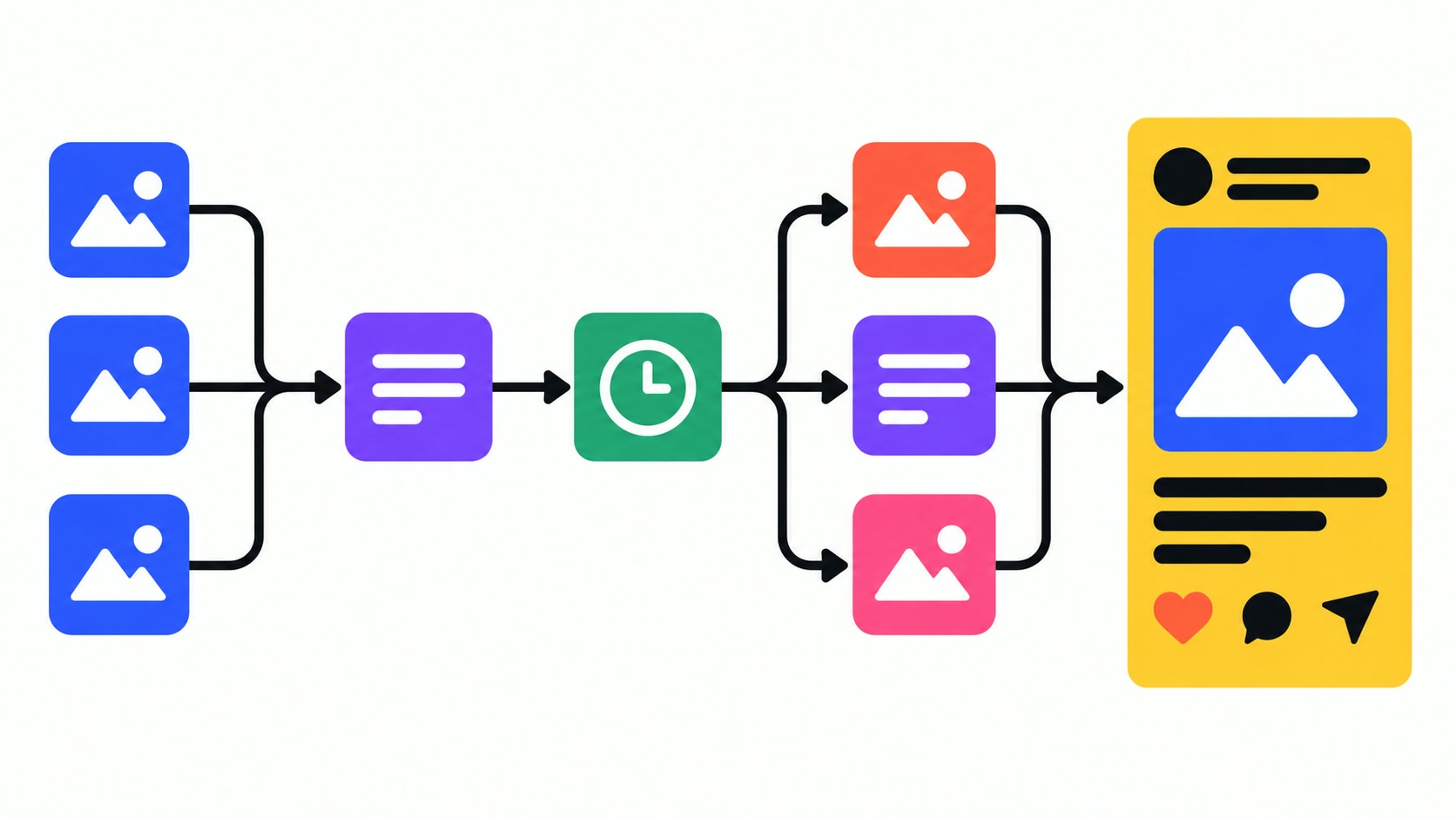
Creating content at scale requires systematic workflows that transform ideas into published posts efficiently. The post create process encompasses everything from initial concept validation to final publication, with each step demanding careful consideration of technical architecture, user experience, and operational efficiency. For social content automation platforms, mastering the post create workflow means balancing speed with quality, ensuring every piece of content maintains brand voice while meeting platform requirements. In 2026, successful content operations leverage proven frameworks, standardized protocols, and intelligent automation to maintain consistency across hundreds or thousands of posts.
Understanding Post Create Architecture
The foundation of any scalable content system lies in how it handles resource creation. When we discuss post create operations, we're examining the technical and operational decisions that determine whether a platform can handle ten posts or ten thousand posts with equal reliability.
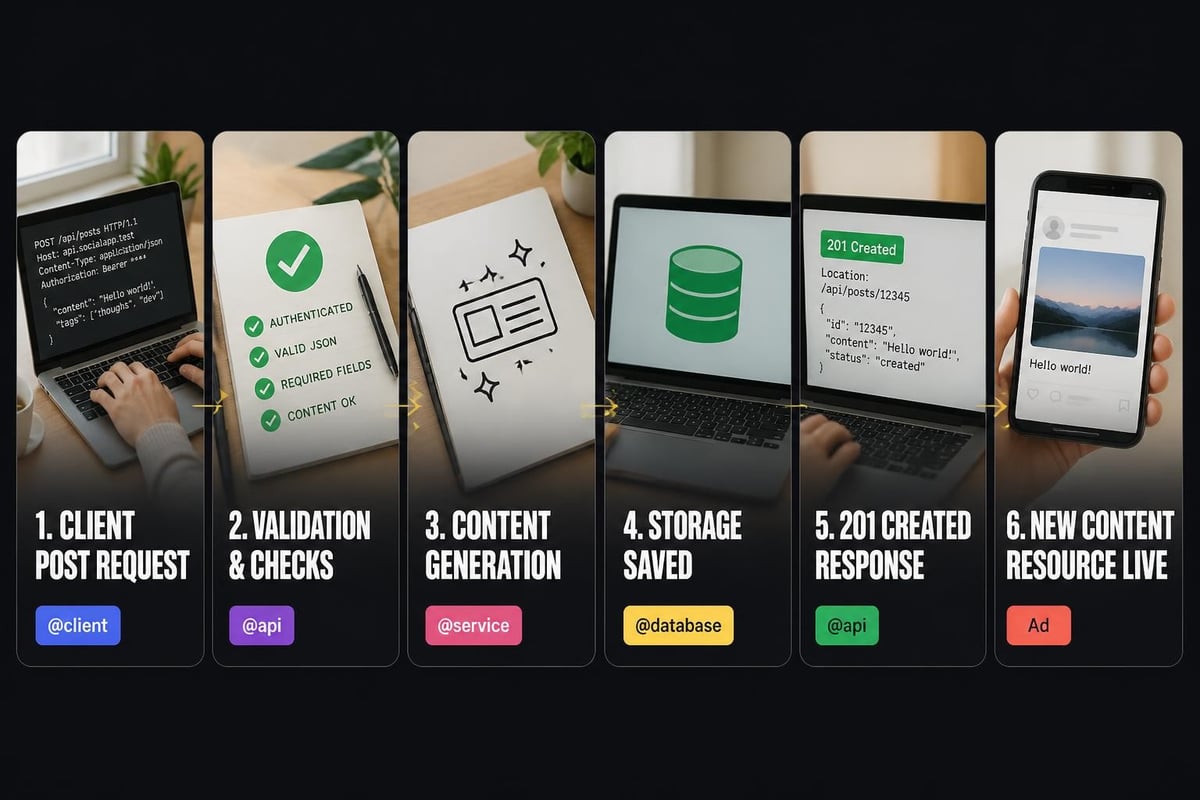
At the protocol level, the HTTP 201 Created status provides the semantic foundation for resource creation. This response code signals successful creation and returns a Location header pointing to the new resource. Understanding these fundamentals helps teams design APIs that communicate clearly with clients and maintain predictable behavior under load.
Designing Creation Endpoints
Modern API design requires thoughtful consideration of how clients initiate post create operations. The RFC 7231 specification establishes the semantic expectations for POST operations, but implementation details vary significantly based on use case.
Key endpoint design considerations include:
- Synchronous versus asynchronous creation workflows
- Idempotency guarantees for duplicate prevention
- Validation strategies before resource commitment
- Response payload structure and metadata inclusion
- Error handling and partial success scenarios
For content platforms handling multiple accounts and profiles, the post create endpoint must accommodate batch operations while maintaining clear feedback on individual item status. A well-designed endpoint returns comprehensive information about what was created, where it lives, and what happens next.
| Design Pattern | Use Case | Response Time | Complexity |
|---|---|---|---|
| Synchronous Create | Simple posts, immediate feedback | 100-500ms | Low |
| Async with Polling | Complex generation, media processing | Variable | Medium |
| Webhook Notification | High-volume, decoupled systems | N/A | High |
| Batch Creation | Multiple posts, scheduled content | 1-5s | Medium |
Request and Response Patterns
The structure of your post create request directly impacts developer experience and system reliability. Following established standards like the JSON:API specification ensures predictable behavior and reduces integration friction.
A typical post create request includes content attributes, relationship data, metadata, and configuration options. The response must communicate success unambiguously while providing all necessary information for subsequent operations.
Essential response elements:
- Unique resource identifier
- Creation timestamp and version
- Computed fields and default values
- Links to related resources
- Processing status indicators
When designing for social content automation, the post create response should include scheduling information, target platform details, and any transformations applied during creation. This transparency helps users understand exactly what happened and troubleshoot when results don't match expectations.
Workflow Automation for Post Create
Scaling content production requires moving beyond manual creation to automated workflows that maintain quality while increasing velocity. The post create process becomes a pipeline where each stage adds value, validates correctness, and prepares content for publication.
Successful automation starts with understanding what triggers post creation. For viral content analysis platforms, the trigger might be identifying a high-performing post in a specific niche. The system then extracts patterns, applies a brand voice profile, and generates original content that incorporates proven engagement elements.
Building Resilient Creation Pipelines
A production-ready post create pipeline handles failures gracefully and provides visibility into processing status. Unlike simple CRUD operations, content creation often involves multiple services, external APIs, and time-consuming transformations.
The Post/Redirect/Get pattern prevents duplicate submissions when users refresh after creating content. This HTTP-level pattern complements application logic that enforces idempotency through unique request identifiers or content fingerprinting.
Pipeline stages typically include:
- Request validation and authentication
- Content analysis and pattern extraction
- Template selection and customization
- Asset generation (images, videos, slideshows)
- Quality checks and brand compliance
- Scheduling and queue management
- Platform-specific formatting
- Final review and publication preparation
Each stage should operate independently with clear input and output contracts. This modularity enables parallel processing, easier testing, and graceful degradation when individual components fail.

Managing State and Consistency
As content moves through creation stages, maintaining consistent state becomes critical. Should a post exist in your system before it's fully generated? How do you handle partial failures when multi-step processes break midway?
The Event Sourcing pattern offers one solution by treating each creation step as an immutable event. Rather than storing current state, you reconstruct it from the sequence of events. This approach provides complete audit trails and enables time-travel debugging when investigating why a post was created with specific attributes.
For platforms managing many profiles and accounts simultaneously, state management extends beyond individual posts to campaign coordination, quota tracking, and performance monitoring. Your post create workflow must update all relevant state atomically or implement compensation logic for rollback scenarios.
API Documentation and Developer Experience
Clear documentation transforms post create operations from mysterious black boxes into predictable, trustworthy services. Whether you're building internal tools or public APIs, comprehensive documentation reduces support burden and accelerates adoption.
The OpenAPI Specification provides a machine-readable format for describing POST operations, including request schemas, response formats, and error conditions. Tools generate interactive documentation, client libraries, and test suites from these specifications, ensuring documentation stays synchronized with implementation.
Documenting Creation Operations
Effective post create documentation goes beyond listing parameters. It explains the business logic, provides realistic examples, describes edge cases, and sets clear expectations about timing and side effects.
Documentation must answer:
- What data is required versus optional?
- Which fields are computed or auto-populated?
- How long does creation typically take?
- What happens if the request times out?
- Can requests be retried safely?
- How do you monitor creation status?
For content automation platforms, examples should demonstrate common workflows like creating a single post, scheduling a campaign, or updating creation parameters mid-process. Code samples in multiple languages help developers integrate quickly without trial-and-error experimentation.
Platform-Specific Creation Patterns
Different platforms impose unique constraints on post create operations. Instagram requires specific image aspect ratios. LinkedIn favors longer-form content with professional tone. TikTok prioritizes video with trending audio. Your creation workflow must accommodate these variations while maintaining efficient, unified backend processing.
The Google Cloud API Design Guide recommends resource-oriented design where POST operations create subordinate resources under parent collections. For social content, this translates to structures like /accounts/{accountId}/posts where each account manages its own post collection.
Multi-Platform Content Adaptation
A sophisticated post create system generates platform-optimized variations from a single source. This requires understanding each platform's API capabilities, content policies, and engagement patterns.
| Platform | Max Length | Media Types | Optimal Aspect Ratio | Posting Frequency |
|---|---|---|---|---|
| Twitter/X | 280 chars | Image, Video, GIF | 16:9 or 1:1 | 3-5x daily |
| 2,200 chars | Image, Video, Carousel | 1:1 or 4:5 | 1-2x daily | |
| 3,000 chars | Image, Video, Document | 1.91:1 or 1:1 | 1x daily | |
| TikTok | 2,200 chars | Video only | 9:16 vertical | 1-3x daily |
Your post create logic adapts content length, reformats media, adjusts tone, and incorporates platform-specific features like hashtags, mentions, or alt text. This adaptation happens automatically based on target platform configuration, not through manual reformatting.
When users paste a link to a viral post, the system identifies its platform, extracts performance metrics, and analyzes what made it successful. The resulting insights inform how new posts are created, ensuring every piece starts from proven engagement patterns rather than guesswork. trendoo automates this entire workflow, transforming viral analysis into original posts that maintain your brand voice across unlimited profiles and accounts.

Testing and Validation Strategies
Robust post create workflows incorporate validation at multiple levels. Client-side validation provides immediate feedback, server-side validation enforces business rules, and post-creation validation confirms the resulting content meets quality standards.
Pre-Creation Validation
Before committing resources to content generation, validate that the request can succeed. Check authentication, verify quota availability, ensure referenced assets exist, and confirm the target account has necessary permissions.
Validation checkpoints:
- Schema compliance and type correctness
- Required field presence and format
- Content length and complexity limits
- Rate limit and quota availability
- Account status and platform connectivity
- Template and profile existence
Early validation prevents wasted processing and provides clear error messages when requests can't be fulfilled. Users receive actionable feedback that guides them toward successful post create operations.
Quality Assurance Post-Creation
After generating content, automated quality checks ensure it meets brand standards and platform requirements. This might include sentiment analysis, readability scoring, trademark verification, or accessibility compliance.
For visual content, quality checks examine resolution, file size, format compatibility, and compliance with platform specifications. Videos require duration checks, audio level validation, and encoding verification.
Scaling Post Create Operations
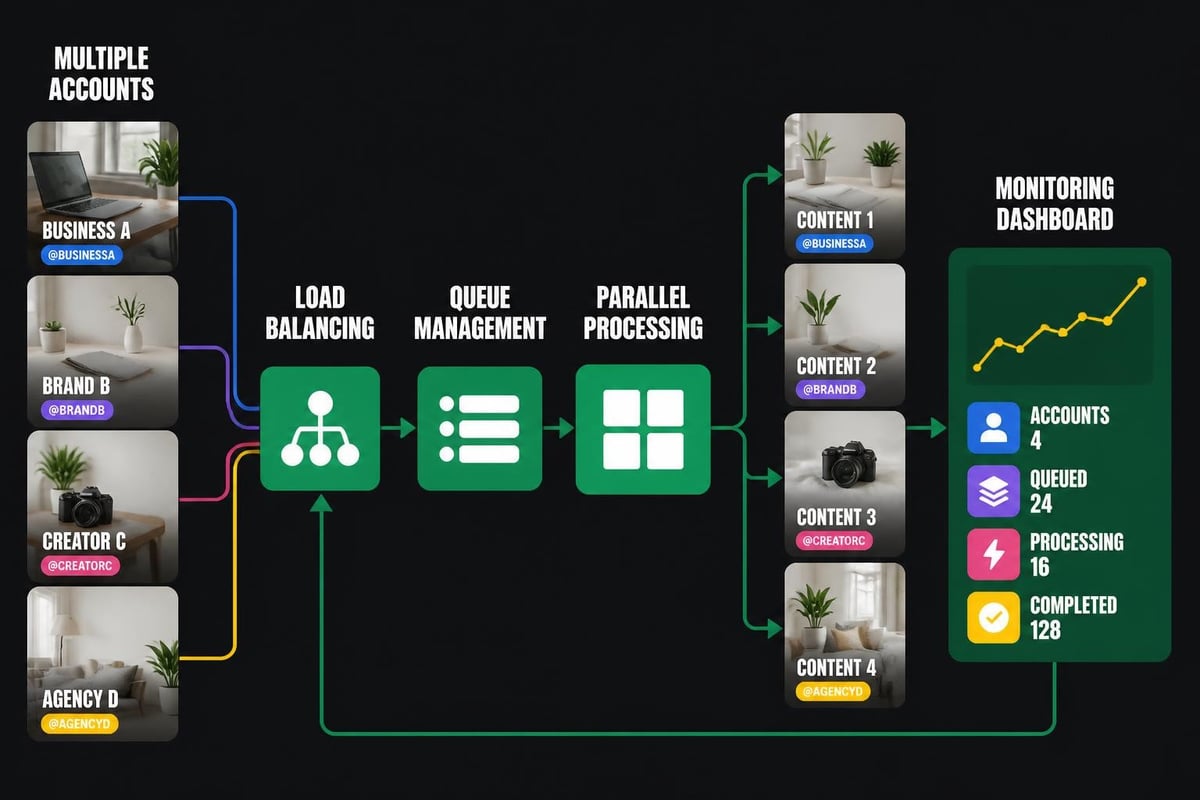
As content volume grows, the post create workflow must scale horizontally while maintaining consistent performance. This requires architectural decisions about queuing, caching, database design, and resource allocation.
Queue Management and Prioritization
Production systems queue post create requests for asynchronous processing rather than blocking client connections. Message queues decouple request acceptance from content generation, enabling elastic scaling based on load.
Priority queues ensure urgent content (breaking news, time-sensitive promotions) processes before routine scheduled posts. Dead-letter queues capture failed requests for later retry or manual intervention.
Queue design considerations:
- Message durability and acknowledgment
- Visibility timeout and retry logic
- Poison message handling
- Queue depth monitoring and alerting
- Consumer scaling policies
For platforms managing hundreds of accounts, each with distinct posting schedules, the queue orchestrates complex dependencies while respecting platform rate limits and optimal posting times.
Performance Optimization
Fast post create operations improve user experience and reduce infrastructure costs. Optimization opportunities exist throughout the pipeline from request parsing to final storage.
Database design impacts creation speed significantly. Proper indexing on lookup fields, denormalization for read-heavy access patterns, and connection pooling all contribute to throughput. For high-volume scenarios, consider write-optimized databases that append content quickly with eventual consistency for derived views.
Caching frequently accessed data reduces redundant computation. Template definitions, brand voice profiles, and platform specifications rarely change, making them ideal caching candidates. Distributed caches enable multiple creation workers to share precomputed data without database hits.
Monitoring and Observability
Understanding post create system behavior requires comprehensive monitoring of technical metrics and business KPIs. Observability transforms opaque processes into transparent operations where teams can diagnose issues quickly and optimize continuously.
Key Metrics for Creation Workflows
Track both technical performance and business outcomes. Technical metrics reveal system health while business metrics indicate whether the creation workflow delivers value.
Technical metrics:
- Request rate and throughput
- Processing latency (p50, p95, p99)
- Error rate by type and stage
- Queue depth and processing lag
- Resource utilization (CPU, memory, storage)
Business metrics:
- Posts created per hour/day
- Success rate by content type
- Time from request to publication
- Content quality scores
- Platform acceptance rate
Correlating technical and business metrics reveals optimization opportunities. If error rates spike but business metrics remain stable, retry logic is working. If processing latency increases while posts per hour decreases, scaling resources may help.
Debugging Failed Creations
When post create operations fail, detailed logging enables rapid diagnosis. Each pipeline stage should emit structured logs with correlation IDs that trace requests end-to-end.
Logs capture input parameters, intermediate results, decision points, and error conditions. When investigating why a post wasn't created as expected, developers reconstruct the entire workflow from logs without reproducing the original request.
Distributed tracing visualizes how requests flow through microservices, identifying bottlenecks and failures. Performance degradation often stems from unexpected service dependencies or cascading timeouts that traces reveal immediately.
Security and Access Control
Post create operations require careful authorization to prevent unauthorized content publication, resource exhaustion, or data leakage. Security considerations span authentication, authorization, input validation, and audit logging.
Authentication and Authorization
Verify user identity before accepting post create requests. Modern systems use token-based authentication (OAuth 2.0, JWT) that scales across distributed services without session state.
Authorization checks ensure authenticated users can create posts for their accounts, not others'. Role-based access control (RBAC) distinguishes between team members who can create drafts versus those authorized to publish immediately.
For platforms supporting agency workflows where one organization manages multiple client accounts, authorization logic must accommodate delegated access with fine-grained permission scoping.
Input Sanitization and Rate Limiting
Never trust user input. Sanitize all content before processing to prevent injection attacks, XSS vulnerabilities, or malicious uploads. Content filtering extends beyond security to brand safety, removing prohibited terms or inappropriate material.
Rate limiting prevents abuse and ensures fair resource allocation. Implement limits at multiple levels: per user, per account, and globally. Sophisticated rate limiting uses sliding windows or token buckets that allow bursts while enforcing long-term quotas.
Checking the semantics of 201 versus 202 responses helps teams design appropriate feedback for synchronous and asynchronous creation patterns, particularly when rate limits or processing queues introduce delays.
Future Trends in Post Create Workflows
Content creation automation continues evolving as AI capabilities advance and platform ecosystems mature. Emerging patterns shape how post create systems will operate in coming years.
Trending developments:
- AI-assisted content generation with human oversight
- Real-time performance optimization during creation
- Cross-platform content orchestration
- Predictive scheduling based on audience behavior
- Automated A/B testing at creation time
Platforms increasingly offer creator APIs that streamline post create operations with better authentication, richer metadata, and improved error handling. Staying current with platform API design patterns ensures your workflows leverage these enhancements as they arrive.
The shift toward structured content enables greater automation while maintaining quality. Rather than free-form text, structured post create requests specify semantic components (headline, body, call-to-action) that systems can optimize independently before assembly.
Mastering the post create workflow separates successful content operations from chaotic ones, transforming scattered efforts into systematic production. Whether you're managing a single account or orchestrating hundreds of profiles across platforms, understanding the technical foundations, automation patterns, and scaling strategies ensures reliable, high-quality content delivery. trendoo handles the complexity of analyzing viral posts and creating original content at scale, so you can focus on strategy while the platform manages execution across all your accounts and profiles.